Why Do a Psychedelic Journey and Integration With Me?
Oct 22, 2026
Because taking a psychedelic and doing psychedelic-assisted work are not the same thing.
People come to psychedelic work for all kinds of reasons. Some have been in therapy for years and understand exactly why they are the way they are, but still feel stuck. Some have spent decades carrying trauma they can explain intellectually but can't seem to move through. Some are burned out, disconnected, or in a major transition and aren't sure who they are anymore. Some have done an enormous amount of healing and feel like they've reached the edge of what their current approaches can offer. And some simply sense there's something deeper they need to explore.
I understand that pull. I'm also a strong believer that psychedelics aren't magic.
They can create extraordinary experiences. They can shift perspective, and they may let you reach emotions, memories, insights, or parts of yourself that are hard to access in ordinary states of consciousness. But the psychedelic doesn't do your healing for you. You do, and that's why the work before and after a journey matters so much.
A Psychedelic Experience Isn't the Same as Psychedelic Therapy
You can have a profound psychedelic experience and change absolutely nothing about your life afterward. You can cry, understand your childhood in a completely new way, and feel connection, grief, love, fear, or forgiveness that's impossible to put into words. You can come away thinking, "Holy shit. I finally understand."
And then Monday happens. Your job is still there, your relationships are still there, and your nervous system is still yours. The patterns you've spent decades building don't disappear because you had an extraordinary experience.
That's where integration comes in. The question isn't only "What happened during my journey?" It's "What am I going to do with what happened?"
Why Preparation Matters
I don't believe good psychedelic work starts when the psychedelic takes effect. It starts well before that. Preparation gives us a chance to understand what you're bringing into the experience:
- Why you're doing this, and what you're hoping for
- What you're afraid of, and what you're trying to heal
- What expectations you're carrying
- What happens when you don't feel in control, and how you usually respond when hard emotions surface
- What your support system looks like, and what your mental health history tells us
- Whether medical, psychiatric, medication-related, or situational factors make this work inappropriate or call for more evaluation first
Those questions matter. I would much rather help someone decide that now isn't the right time than encourage a psychedelic experience simply because psychedelics are exciting. Good psychedelic work isn't about getting everyone to a journey. It's about figuring out whether this work makes sense for this person, at this point in their life, for these reasons.
Who Might Benefit From This Work
Psychedelic preparation and integration may be worth exploring if you feel stuck despite doing significant personal work. Maybe you understand your patterns but can't shift them. Maybe you're carrying unresolved experiences, moving through grief, identity changes, burnout, or a major transition, or questioning the life you've built and what feels meaningful. Maybe you're starting to recognize how much of yourself you've masked, suppressed, or shaped around other people's expectations. Or maybe traditional therapy has helped enormously, and you sense there's another layer you want to explore.
This work also appeals to people who are deeply curious about themselves and want to approach altered states intentionally rather than recreationally. You don't have to be falling apart to want deeper healing. Sometimes the question isn't "How do I make my symptoms go away?" It's "Who am I underneath all of this?" That's a question I'm very comfortable sitting with.
Who This Work Is Not For
If you're looking for a psychedelic to fix you, this probably isn't the work you're looking for. If the expectation is "I'll take something, have a breakthrough, and finally be healed," we're going to have a conversation about that. Psychedelics can be powerful, but powerful isn't the same as effortless.
This work also isn't appropriate for everyone at every point in their life. Certain psychiatric or medical histories, medications, acute mental health crises, instability, or other circumstances can change the risk profile significantly. Part of responsible preparation is being willing to say not now, or this isn't the right approach for you, when that's what the situation calls for.
Screening isn't something standing between you and the "real" work. Screening is part of the real work.
What Makes Working With Me Different
I'm a therapist first. I understand trauma, nervous systems, and what happens when protective strategies that once kept us safe become the very things keeping us stuck. I also understand that not every meaningful human experience fits neatly inside a diagnostic box.
My approach sits at the intersection of the psychological and the sacred. I can hold clinical complexity while leaving room for experiences that a treatment manual can't explain. I'm not interested in telling you what your experience means. I'm interested in helping you discover what it means.
If you see something during a journey, feel an intense emotion, revisit a memory, meet a younger version of yourself, experience profound interconnectedness, or have something happen that feels deeply spiritual, I'm not going to hand you an interpretation. We'll get curious about what it felt like, what it brings up, what it connects to, and what your mind and body might be asking you to notice. Most importantly, we'll look at how it changes the way you want to live.
I Won't Ask You to Go Somewhere I Haven't Been Willing to Go Myself
I believe deeply in modeling the work we ask clients to do. My approach isn't built around standing outside hard human experiences and analyzing them clinically. I believe in doing our own work, examining our patterns, sitting with uncertainty, and looking at the uncomfortable things.
That doesn't mean my experience becomes the blueprint for yours. It means I respect the vulnerability this work takes. Going inward can be beautiful, and it can also be messy, uncomfortable, confusing, frightening, funny, profound, anticlimactic, or all of those at once. You don't have to perform a "good trip" for me.
What If I Have a Bad Trip?
This is one of the most common fears people bring to psychedelic work, and I think the language matters. A difficult experience isn't automatically a bad experience. Fear, grief, and trauma material can come up, and you may meet things you'd rather not look at.
Preparation isn't about guaranteeing none of that happens. Nobody can promise you that. It's about building resources, understanding your patterns, talking through how you respond to hard experiences, and helping you approach the journey with more capacity to meet whatever emerges. Sometimes the experiences we'd never choose become deeply meaningful. That doesn't mean suffering should be romanticized. It means difficult and valuable can exist at the same time.
Integration Is Where the Work Becomes Your Life
This is the piece I wish more people understood. You can have the most beautiful insight in the world, and if nothing changes afterward, it stays an insight. Integration asks:
- What did you learn, and what surprised you?
- What are you grieving, and what became clearer?
- What feels confusing, and what do you want to remember?
- What patterns no longer fit, and what boundary needs to change?
- What conversation do you need to have, and what relationship with yourself needs attention?
- What would it look like to live according to what you discovered?
Sometimes integration is emotional, relational, or spiritual. Sometimes it's incredibly practical. Maybe the great revelation from your journey is that you hate your job. Okay. Now we figure out what the fuck we're going to do about that. That's integration.
The Goal Isn't the Journey
This might sound strange from someone who believes strongly in psychedelic-assisted work, but I don't think the journey itself should be the goal. The goal is what happens to your relationship with yourself afterward: understanding yourself differently, meeting an old wound with more compassion, catching a pattern sooner, no longer abandoning yourself to keep other people comfortable, reconnecting with parts of yourself you've ignored, and making choices that fit who you are.
The psychedelic experience may open a door. You still have to walk through it.
Why Do This With Me
Because I won't sell you magic. I won't tell you a psychedelic will fix you, I won't force meaning onto your experience, and I won't treat the journey like an isolated event.
I'll help you prepare thoughtfully, approach the experience with intention, make space for whatever comes up, and then do the less glamorous, incredibly important work of figuring out what it means for the life you're living. We'll bring together clinical knowledge, trauma-informed care, curiosity, nervous system awareness, existential questions, and room for the parts of psychedelic experiences that don't fit neatly into psychological language. We can talk about your childhood, your relationships, death, meaning, consciousness, spirituality, identity, grief, love, shame, and whatever giant human questions show up.
You don't have to make your experience smaller so it fits inside a therapy session. That's exactly the kind of work I'm interested in, and you can read more about how I structure it on my psychedelic-assisted therapy and integration page.
Frequently Asked Questions
What is psychedelic integration therapy?
Integration therapy helps you make sense of a psychedelic experience and turn what you learned into real changes in your relationships, boundaries, patterns, and daily life. It can happen after a planned journey or after a past experience you're still trying to understand.
Why does preparation matter before a psychedelic journey?
Preparation clarifies your intentions and fears, screens for medical, psychiatric, and medication factors that change the risk, and builds the resources you need to meet difficult material if it comes up.
Is psychedelic work right for everyone?
No. Certain psychiatric or medical histories, medications, acute crises, or instability can make it inappropriate or call for more evaluation first. Responsible preparation includes being willing to say "not now."
Ready to Explore Whether Psychedelic Work Is Right for You?
You don't have to know whether you want to move forward before reaching out. That's part of the process. We'll start with a conversation about what you're experiencing, why psychedelic work interests you, what you're hoping to explore, and whether preparation and integration with me make sense. If it does, we'll build the work intentionally, and if it doesn't, I'll tell you that too. The goal isn't to get you to a journey. It's to help you make thoughtful decisions about your healing.
If you're feeling stuck, curious, or wondering whether psychedelic-assisted work could be part of your next chapter, schedule a psychedelic preparation and integration consultation.
The medicine may open the door. The work is what you do with what you find on the other side.
About the Author
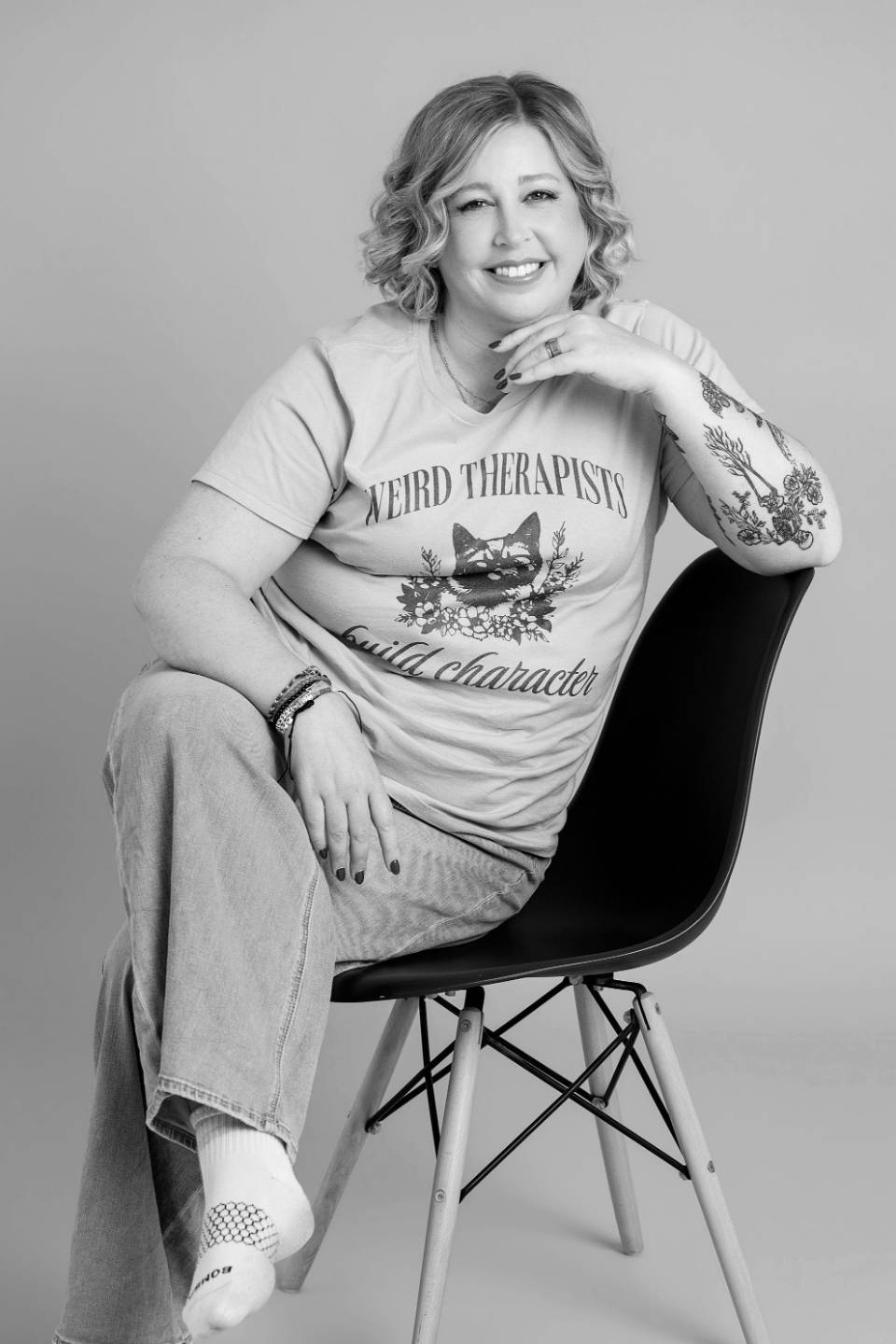 Becca Gerlach, LMSW, CAADC is a therapist, consultant, and coach, and the owner of Being Human Group. She helps high-achieving women and neurodivergent adults recover from burnout, unmask, and stop living in survival mode, through focused burnout recovery intensives, EMDR, psychedelic-assisted therapy and integration, and clinical consultation for therapists. She knows burnout from the inside, too. Read Becca's story.
